
Introduction
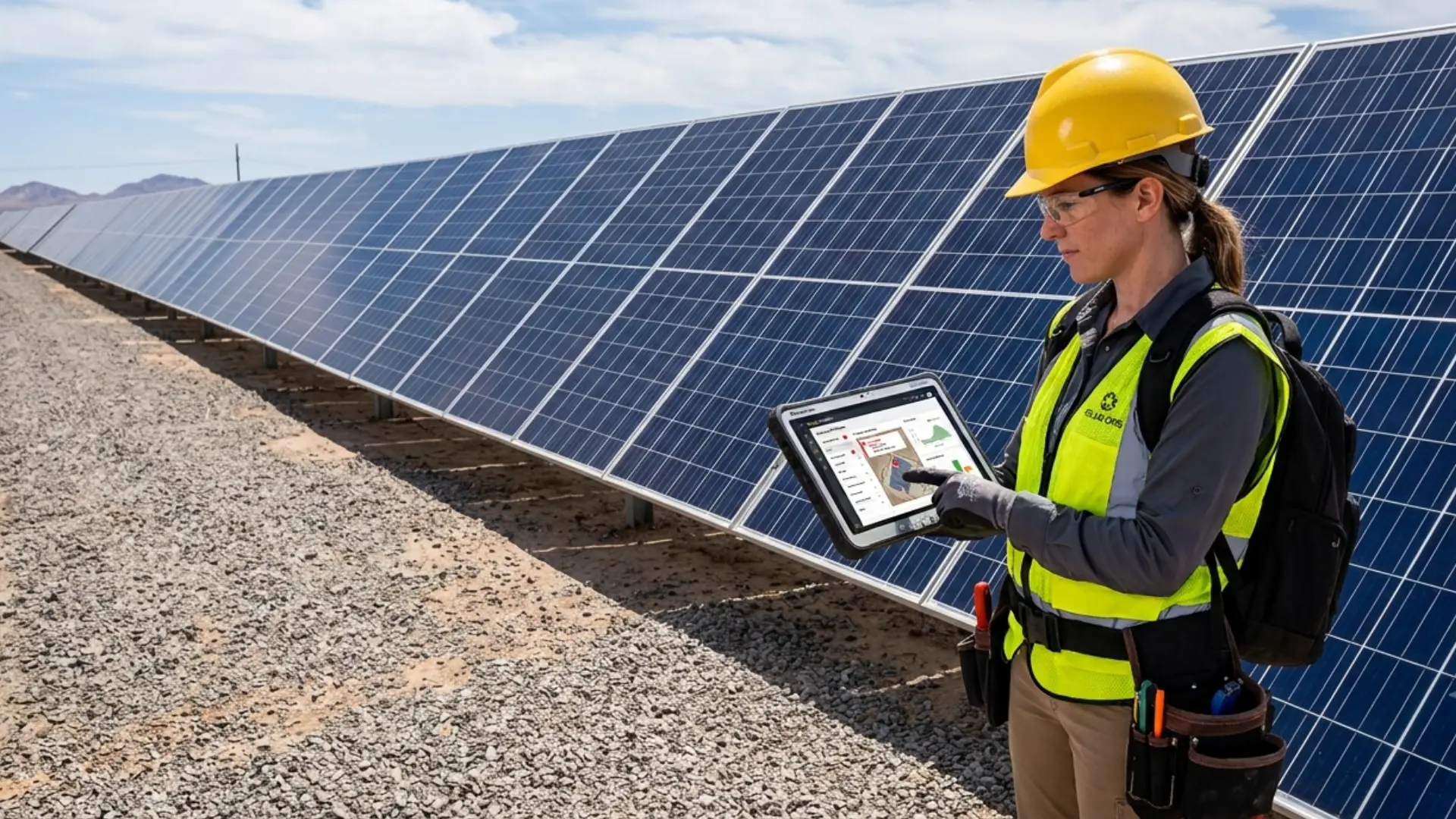
In the rapidly evolving landscape of solar energy, operational efficiency is paramount. A Computerized Maintenance Management System (CMMS) plays a crucial role in ensuring that solar operations run smoothly and effectively. By automating maintenance tasks, tracking asset performance, and managing work orders, a CMMS helps solar park operation and maintenance companies optimize their resources and minimize downtime. As the solar industry continues to grow, the integration of CMMS with platforms like Microsoft 365 emerges as a game changer, enhancing data management and operational efficiency.
What is CMMS?
A CMMS is a software solution designed to streamline maintenance management processes. It allows organizations to track maintenance activities, manage inventory, schedule preventive maintenance, and analyze equipment performance. For solar operations, where equipment reliability is critical, a CMMS can significantly reduce the risk of unexpected failures and costly downtime. By providing a centralized platform for maintenance data, a CMMS empowers teams to make informed decisions based on real-time insights.
The Importance of Maintenance in Solar Operations
Maintenance is vital in solar operations for several reasons:
- Maximizing Uptime: Solar panels and associated equipment must operate at peak efficiency to ensure optimal energy production. Regular maintenance helps identify and address issues before they escalate, thereby maximizing uptime.
- Cost Efficiency: Preventive maintenance can save companies significant costs by reducing the need for emergency repairs and extending the lifespan of equipment.
- – Regulatory Compliance: Adhering to maintenance schedules and documentation is essential for compliance with industry regulations and standards.
Benefits of Integrating CMMS with Microsoft 365
Integrating a CMMS with Microsoft 365 offers numerous advantages for solar operations:
1. Centralized Data Management: By leveraging Microsoft 365’s cloud capabilities, solar companies can centralize their maintenance data, making it accessible from anywhere. This ensures that field service teams have real-time access to critical information, enhancing collaboration and decision-making.
2. Enhanced Data Accuracy and Reporting: Integration allows for seamless data sharing between the CMMS and other Microsoft 365 applications, such as Excel and Power BI. This capability enables advanced reporting and analytics, providing insights into maintenance trends and performance metrics.
3. Automation of Maintenance Processes: With Microsoft 365 tools like Power Automate, routine maintenance tasks can be automated, reducing manual effort and minimizing the risk of human error. For instance, automated alerts can notify teams of upcoming maintenance schedules or equipment issues.
4. Improved Collaboration: Microsoft 365 fosters collaboration among teams through tools like Teams and SharePoint. This integration allows maintenance teams to communicate effectively, share documents, and collaborate on projects in real-time, regardless of their location.
5. Scalability: As solar operations expand, the integration with Microsoft 365 provides the scalability needed to accommodate growth. Companies can easily add new users, assets, and functionalities without significant disruptions.
For solar park operation and maintenance companies, integrating a CMMS with Microsoft 365 is not just a technological upgrade; it is a strategic move towards enhanced operational efficiency. By harnessing the power of cloud-based solutions, organizations can streamline their maintenance processes, improve data accuracy, and foster collaboration among teams. As the solar industry continues to evolve, embracing such integrations will be essential for staying competitive and achieving long-term success.
In the following sections, we will explore specific case studies and actionable strategies for implementing this integration effectively, ensuring that your solar operations are not only efficient but also future-ready.
Understanding CMMS Integration
Integrating a Computerized Maintenance Management System (CMMS) with other software platforms is a transformative process that enhances operational efficiency, particularly in solar operations. CMMS integration involves connecting your maintenance management system with various digital tools and platforms, allowing for seamless data exchange and improved workflow. This integration is crucial for solar park operation and maintenance companies, as it streamlines processes, enhances data accuracy, and ultimately leads to better decision-making.
What is CMMS Integration?
CMMS integration refers to the process of linking a CMMS with other enterprise systems, such as Enterprise Resource Planning (ERP), Customer Relationship Management (CRM), and Internet of Things (IoT) devices. This connectivity enables organizations to share data across platforms, automate maintenance tasks, and gain real-time insights into their operations. For solar operations, this means that maintenance teams can access critical information about equipment performance, maintenance schedules, and inventory levels from a single interface.
Common Systems for Integration
Several systems can be integrated with CMMS to enhance its functionality:
- ERP Systems: Integrating CMMS with ERP systems like Microsoft Dynamics or SAP allows for better resource allocation and financial management, ensuring that maintenance activities align with overall business objectives.
- SCADA Systems: Supervisory Control and Data Acquisition (SCADA) systems provide real-time monitoring of solar equipment. Integrating SCADA with CMMS enables proactive maintenance by alerting teams to potential issues before they escalate.
- IoT Devices: Sensors and IoT devices can feed real-time data into the CMMS, allowing for predictive maintenance strategies that reduce downtime and extend the lifespan of solar assets.
- Microsoft 365: By leveraging Microsoft 365, WIZSP CMMS offers seamless integration with tools like SharePoint, Teams, and Power BI. This integration enhances collaboration among field service teams, facilitates data sharing, and provides advanced reporting capabilities.
Benefits of Integration for Solar Operations
The integration of CMMS with various systems, particularly Microsoft 365, offers numerous benefits for solar operations:
- Enhanced Data Accuracy: With real-time data sharing, teams can make informed decisions based on the most current information, reducing the risk of errors associated with manual data entry.
- Improved Operational Efficiency: Automated workflows streamline maintenance processes, allowing teams to focus on critical tasks rather than administrative duties. For instance, automated alerts can notify technicians of upcoming maintenance needs, ensuring timely interventions.
- Cost Savings: By optimizing maintenance schedules and reducing equipment downtime, solar operations can significantly lower maintenance costs. A study by the U.S. Department of Energy found that predictive maintenance can reduce maintenance costs by up to 30%.
- Better Collaboration: Integrating CMMS with Microsoft 365 tools fosters collaboration among teams. For example, using Microsoft Teams, field service teams can communicate in real-time, share updates, and access maintenance records from anywhere, enhancing responsiveness and teamwork.
- Scalability: As solar operations grow, the cloud-based nature of WIZSP CMMS allows for easy scalability. New users and functionalities can be added without significant infrastructure changes, ensuring that the system evolves with the business.
Integrating CMMS with Microsoft 365 and other systems is a game changer for solar operations. It not only enhances maintenance efficiency but also empowers teams with the tools they need to make data-driven decisions. By embracing this integration, solar park operation and maintenance companies can position themselves for success in an increasingly competitive market. For those looking to optimize their maintenance solutions, WIZSP CMMS offers a robust platform designed specifically for the unique challenges of solar operations.
Benefits of Integrating CMMS with Microsoft 365
Integrating a Computerized Maintenance Management System (CMMS) like WIZSP with Microsoft 365 can revolutionize solar operations by enhancing efficiency, accuracy, and collaboration. Here are the key benefits that solar park operation and maintenance companies can expect from this integration:
Streamlined Maintenance Processes
By integrating WIZSP CMMS with Microsoft 365, solar operations can automate and streamline maintenance workflows. This integration allows for the scheduling of preventive maintenance tasks directly within Microsoft Outlook, ensuring that maintenance teams receive timely reminders and updates. For instance, if a solar panel requires cleaning or inspection, the system can automatically generate a work order and notify the relevant field service team, reducing downtime and enhancing asset reliability.
Centralized Data Management
One of the most significant advantages of this integration is centralized data management. With WIZSP CMMS operating within the Microsoft 365 ecosystem, all maintenance data, asset information, and operational metrics are stored in a single, accessible location. This eliminates data silos and ensures that all stakeholders—from field technicians to management—have access to the same up-to-date information. For example, if a technician logs a maintenance issue in the CMMS, it is instantly available to the operations team for review and action, fostering a more cohesive operational environment.
Enhanced Reporting and Analytics
The integration of WIZSP CMMS with Microsoft 365 provides powerful reporting and analytics capabilities. Users can leverage Microsoft Power BI to create dynamic dashboards that visualize key performance indicators (KPIs) related to maintenance activities, asset performance, and operational efficiency. This real-time reporting allows solar operations to make data-driven decisions quickly. For instance, if analytics reveal a recurring issue with a specific type of solar panel, management can proactively address the problem before it escalates, ultimately saving costs and improving system reliability.
Improved Collaboration Among Teams
Collaboration is crucial in solar operations, where field service teams, management, and support staff must work together seamlessly. The integration of WIZSP CMMS with Microsoft Teams facilitates real-time communication and collaboration. Teams can share updates, discuss maintenance issues, and collaborate on solutions directly within the Teams platform. For example, if a technician encounters an unexpected issue during maintenance, they can quickly share photos and details with the engineering team via Teams, enabling faster resolution and minimizing operational disruptions.
Integrating WIZSP CMMS with Microsoft 365 is not just a technological upgrade; it is a strategic move that can significantly enhance the efficiency and effectiveness of solar operations. By streamlining maintenance processes, centralizing data management, enhancing reporting and analytics, and improving collaboration, solar park operation and maintenance companies can achieve greater operational excellence. As the solar industry continues to grow, leveraging such integrations will be essential for staying competitive and maximizing the return on investment in solar assets.
By adopting this integrated approach, companies can not only improve their maintenance strategies but also contribute to a more sustainable and efficient energy future.
Challenges in CMMS Integration
Integrating a Computerized Maintenance Management System (CMMS) like WIZSP with Microsoft 365 can revolutionize solar operations, but it is not without its challenges. Understanding these hurdles and how to overcome them is crucial for solar park operation and maintenance companies aiming to enhance their efficiency and effectiveness.
1. Data Migration Issues
One of the most significant challenges in CMMS integration is data migration. Transferring existing data from legacy systems to a new CMMS can lead to data loss, corruption, or inaccuracies if not handled properly.
Actionable Advice:
- Conduct a Data Audit: Before migration, assess the quality and relevance of your existing data. Identify what needs to be migrated and what can be archived or discarded.
- Use Automated Tools: Leverage data migration tools that can help automate the process, ensuring accuracy and reducing manual errors.
- Test Migration: Perform a test migration with a small data set to identify potential issues before the full-scale migration.
2. System Compatibility
Ensuring compatibility between WIZSP CMMS and Microsoft 365, as well as other existing systems, can be a complex task. Different software may use varying data formats and protocols, leading to integration challenges.
Actionable Advice:
- API Utilization: Make use of APIs provided by both WIZSP and Microsoft 365 to facilitate seamless data exchange. This can help bridge compatibility gaps.
- Consult with Experts: Engage with IT professionals or consultants who specialize in system integrations to ensure that all components work harmoniously together.
3. Training and Change Management
Integrating a new CMMS often requires a cultural shift within the organization. Employees may resist changes to their established workflows, leading to decreased productivity and morale.
Actionable Advice:
- Comprehensive Training Programs: Develop training sessions tailored to different user groups within your organization. This ensures that everyone understands how to use the new system effectively.
- Change Champions: Identify and empower change champions within your teams who can advocate for the new system and assist their colleagues during the transition.
4. Workflow Redesign
The integration of WIZSP CMMS with Microsoft 365 may necessitate a redesign of existing workflows to fully leverage the capabilities of the new system. This can be daunting, especially for teams accustomed to their current processes.
Actionable Advice:
- Map Current Workflows: Document existing workflows to identify inefficiencies and areas for improvement. This will provide a clear picture of what needs to change.
- Collaborative Redesign Sessions: Involve team members in the redesign process. Their insights can lead to more effective workflows that enhance productivity and buy-in.
While integrating WIZSP CMMS with Microsoft 365 presents challenges, these can be effectively managed with careful planning and execution. By addressing data migration issues, ensuring system compatibility, investing in training, and redesigning workflows, solar operations can unlock the full potential of their maintenance management systems. This integration not only streamlines operations but also enhances data accuracy and operational efficiency, ultimately leading to improved maintenance outcomes and reduced costs.
By proactively tackling these challenges, solar park operation and maintenance companies can position themselves for success in an increasingly competitive landscape.
Best Practices for Successful CMMS Integration
Integrating a Computerized Maintenance Management System (CMMS) like WIZSP with Microsoft 365 can revolutionize solar operations, enhancing efficiency and data accuracy. However, successful integration requires careful planning and execution. Here are some best practices tailored for solar park operation and maintenance companies to ensure a smooth transition and maximize the benefits of this powerful combination.
1. Thorough Planning and Assessment
Before diving into integration, conduct a comprehensive assessment of your current systems and processes. This involves:
- Identifying Needs: Determine what specific functionalities you require from the CMMS and how Microsoft 365 can support these needs. For instance, if your solar operations rely heavily on real-time data sharing, ensure that your integration plan includes features that facilitate this.
- Mapping Workflows: Outline existing workflows and identify areas where integration can streamline processes. For example, integrating WIZSP CMMS with Microsoft Teams can enhance communication among field service teams, allowing for quicker decision-making and issue resolution.
2. Ensuring Data Accuracy
Data integrity is crucial for effective maintenance management. To ensure accuracy during integration:
- Data Cleaning: Before migrating data to the new system, clean and validate existing data. This step helps eliminate duplicates and inaccuracies that could lead to operational inefficiencies.
- Real-Time Updates: Leverage Microsoft 365’s capabilities to ensure that data is updated in real-time across all platforms. This can be particularly beneficial for solar operations, where timely information about equipment status can prevent costly downtime.
3. Training Staff Effectively
A successful integration is only as good as the people using it. Invest in comprehensive training programs to ensure that your staff is well-equipped to utilize the new system:
- Hands-On Training: Provide hands-on training sessions that allow staff to familiarize themselves with WIZSP CMMS and its integration with Microsoft 365. This could include practical exercises on how to generate reports or manage maintenance schedules.
- Ongoing Support: Establish a support system for employees to address any questions or challenges they may encounter post-integration. This could involve creating a dedicated helpdesk or utilizing Microsoft Teams for ongoing support discussions.
4. Continuous Monitoring and Improvement
Integration is not a one-time event; it requires ongoing evaluation and refinement:
- Performance Metrics: Set clear performance metrics to evaluate the effectiveness of the integration. For example, track maintenance response times and equipment uptime before and after integration to measure improvements.
- Feedback Loops: Create channels for staff to provide feedback on the new system. Regularly review this feedback to identify areas for improvement and make necessary adjustments to workflows or training programs.
Integrating WIZSP CMMS with Microsoft 365 can significantly enhance the operational efficiency of solar maintenance teams. By following these best practices—thorough planning, ensuring data accuracy, effective training, and continuous monitoring—solar operations can harness the full potential of this integration. As a result, companies can expect improved maintenance processes, reduced downtime, and ultimately, a more sustainable and profitable operation.
By implementing these strategies, solar park operation and maintenance companies can not only streamline their processes but also position themselves as leaders in the renewable energy sector, ready to tackle the challenges of tomorrow.
Empowering Field Service Teams with Integrated Solutions
Integrating a Computerized Maintenance Management System (CMMS) like WIZSP with Microsoft 365 is a transformative step for solar operations, particularly for field service teams. This integration not only streamlines maintenance processes but also enhances the efficiency and effectiveness of teams working in the field. Here’s how:
Real-Time Data Access
One of the most significant advantages of integrating WIZSP CMMS with Microsoft 365 is the ability to access real-time data. Field service teams can retrieve critical information about equipment status, maintenance schedules, and operational metrics directly from their mobile devices. This immediacy allows technicians to make informed decisions on-site, reducing downtime and improving response times.
For instance, if a solar panel shows signs of malfunction, a technician can quickly check the maintenance history and performance data through the integrated system. This capability not only speeds up troubleshooting but also ensures that the right parts and tools are available, minimizing unnecessary trips back to the office.
Mobile Capabilities
The mobile capabilities of Microsoft 365, combined with WIZSP CMMS, empower field service teams to work more flexibly and efficiently. With applications like Microsoft Teams and SharePoint, technicians can collaborate in real-time, share updates, and access documentation from anywhere.
Imagine a scenario where a technician encounters an unexpected issue with a solar inverter. Instead of waiting for a supervisor to arrive, they can use Microsoft Teams to share images and details of the problem instantly. This collaborative approach not only accelerates problem resolution but also fosters a culture of teamwork and knowledge sharing.
Improved Communication and Collaboration
Effective communication is crucial in solar operations, where teams often work in remote locations. The integration of WIZSP CMMS with Microsoft 365 enhances communication channels, ensuring that all team members are on the same page.
With tools like Outlook and Teams, field service teams can easily schedule maintenance tasks, send alerts about equipment status, and share insights from the field. This level of connectivity reduces the risk of miscommunication and ensures that everyone involved in the maintenance process is informed and aligned.
Moreover, the integration allows for seamless documentation and reporting. Field teams can generate maintenance reports directly from the CMMS, which can then be shared with management for review and analysis. This not only saves time but also enhances accountability and transparency within the organization.
Actionable Advice for Implementation
To maximize the benefits of integrating WIZSP CMMS with Microsoft 365, consider the following actionable steps:
- Training: Ensure that all field service personnel are trained on how to use the integrated system effectively. This includes understanding how to access data, communicate with team members, and generate reports.
- Customization: Tailor the integration to meet the specific needs of your solar operations. Customize dashboards and alerts to focus on the most critical metrics for your team.
- Feedback Loop: Establish a feedback mechanism where field teams can share their experiences and suggestions for improving the integration. This will help in continuously refining processes and enhancing user experience.
Integrating WIZSP CMMS with Microsoft 365 is a game changer for solar operations, particularly for field service teams. By leveraging real-time data access, mobile capabilities, and improved communication, organizations can enhance their operational efficiency and effectiveness. As the solar industry continues to grow, adopting such integrated solutions will be essential for staying competitive and ensuring optimal maintenance practices.
Future Trends in CMMS and Microsoft 365 Integration
As the solar energy sector continues to evolve, the integration of Computerized Maintenance Management Systems (CMMS) with platforms like Microsoft 365 is set to revolutionize operations. This synergy not only enhances maintenance efficiency but also paves the way for future advancements that can significantly impact solar operations. Here, we explore key trends that are shaping this integration landscape.
Increased Automation
Automation is at the forefront of CMMS and Microsoft 365 integration. By leveraging tools like Power Automate within Microsoft 365, solar operations can automate routine maintenance tasks, such as scheduling inspections and generating work orders. For instance, WIZSP CMMS can automatically trigger maintenance alerts based on predefined criteria, reducing the manual workload for field service teams. This not only streamlines operations but also minimizes human error, ensuring that maintenance tasks are executed promptly and efficiently.
AI and Machine Learning Applications
The incorporation of artificial intelligence (AI) and machine learning into CMMS is another trend that promises to enhance solar operations. By analyzing historical maintenance data, AI algorithms can predict equipment failures before they occur, allowing for proactive maintenance strategies. For example, WIZSP CMMS can utilize machine learning to identify patterns in equipment performance, enabling operators to schedule maintenance during non-peak hours, thus minimizing downtime. This predictive maintenance approach not only extends the lifespan of solar assets but also optimizes operational efficiency.
IoT Integration for Predictive Maintenance
The Internet of Things (IoT) is transforming how solar operations monitor and maintain their assets. By integrating IoT sensors with CMMS, operators can collect real-time data on equipment performance and environmental conditions. For instance, solar panels equipped with IoT sensors can relay information about their energy output and operational status directly to WIZSP CMMS. This data can be analyzed to predict when maintenance is needed, allowing for timely interventions that prevent costly failures. According to a report by McKinsey, predictive maintenance can reduce maintenance costs by up to 30% and increase equipment uptime by 20%.
Actionable Advice for Solar Operations
To harness these trends effectively, solar operations should consider the following actionable steps:
- Invest in Training: Ensure that your field service teams are well-versed in using Microsoft 365 tools and WIZSP CMMS features. Regular training sessions can help staff leverage automation and AI capabilities effectively.
- Utilize Data Analytics: Take advantage of the data analytics features within Microsoft 365 to gain insights into maintenance trends and equipment performance. This can inform better decision-making and resource allocation.
- Implement IoT Solutions: Explore IoT solutions that can be integrated with your CMMS. This will provide real-time monitoring capabilities and enhance your predictive maintenance strategies.
- Foster Collaboration: Use Microsoft Teams to enhance communication among field service teams. This can facilitate quicker decision-making and improve response times to maintenance issues.
The future of CMMS and Microsoft 365 integration in solar operations is bright, driven by trends in automation, AI, and IoT. By embracing these advancements, solar park operation and maintenance companies can not only improve their maintenance processes but also achieve significant cost savings and operational efficiencies. As the industry continues to evolve, staying ahead of these trends will be crucial for maintaining a competitive edge in the renewable energy landscape.
Embrace Digital Transformation
The transition to a more integrated and digital approach is not just a trend; it is a necessity for staying competitive in the solar energy sector. Embracing digital transformation through the integration of CMMS with Microsoft 365 can position your organization for success in an increasingly data-driven world.
Take the first step towards revolutionizing your maintenance operations by considering WIZSP CMMS. Schedule a demo today to see firsthand how this powerful tool can streamline your processes, enhance collaboration, and ultimately drive your solar operations to new heights.
In conclusion, the integration of CMMS with Microsoft 365 is not merely a technological upgrade; it is a strategic move that can redefine how solar operations manage maintenance, optimize resources, and achieve sustainability goals. Don’t get left behind—embrace the future of solar operations today!