Five Hundred is named for the 500.0 seconds it takes light to travel from the Sun to the Earth — a physical constant, precise to a single decimal place. It is not a round number. It is not approximate. It is what it is. That precision — and that reliability — is the entire point.
A Physical Constant, Not a Brand Name
When we named this product, we were not looking for something that would test well in focus groups or score highly in available domain name searches. We were looking for something true.
500.0 seconds. That is how long it takes a photon — moving at 299,792,458 metres per second — to travel the 149.6 million kilometres from the surface of the Sun to the surface of the Earth. It varies by a few seconds across the year as the Earth’s orbital distance changes. But as a working constant, as the number you anchor your understanding to: five hundred seconds.
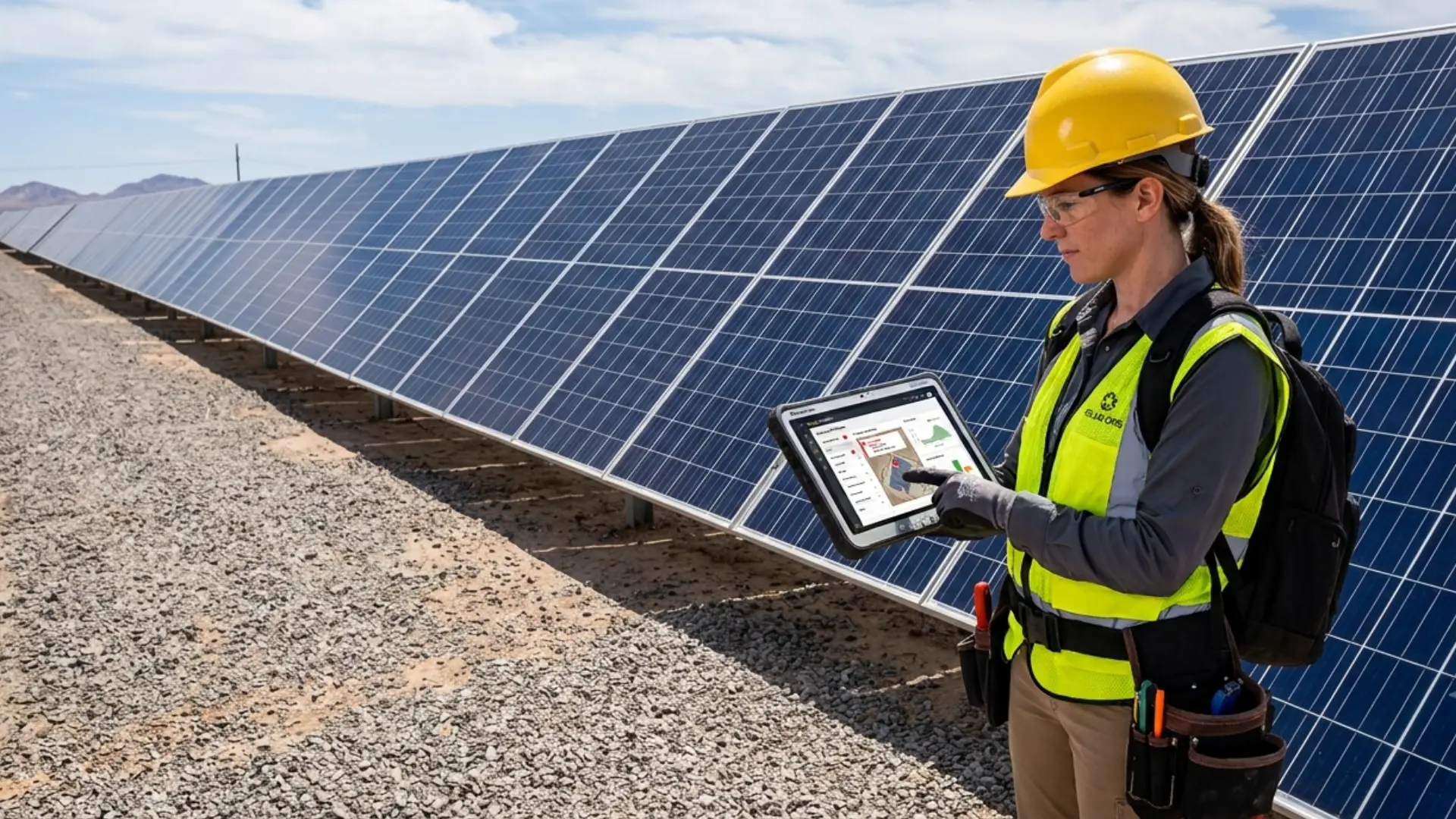
Every megawatt-hour generated by a solar park began with a photon making that journey. Eight minutes and nineteen seconds of travel, from a nuclear reaction 1.5 × 10⁸ kilometres away, to a PV cell on a roof or a field somewhere in Spain or Romania or the UK.
We named our software after that journey because the journey has a quality we want our product to inherit: it is utterly reliable, utterly precise, and completely indifferent to the chaos of human operational complexity. The physics doesn’t care whether your inverter SCADA is misconfigured, your quarterly report is three days late, or your maintenance contractor filed the wrong fault code. The photons arrive in 500 seconds. Every time.
What Precision Means in Solar O&M
Solar operations management is not a precision industry in practice, even though it is one in principle.
The principles are precise: IEC 62446 defines exactly what must be documented and when. SCADA systems log exact fault timestamps. Power curves define exactly what a healthy string should produce at a given irradiance. Inverter manufacturers specify exact commissioning test values that indicate a healthy unit versus a degraded one.
The practice, in most operations, is something else: spreadsheets that capture approximate maintenance records, email threads that constitute the work order system, PDF reports assembled manually from three different data sources over four working days, fault records that say “inverter issue — fixed” without a root cause code or a return-to-service timestamp.
The gap between the precision the asset demands and the precision the management system provides is where megawatt-hours are lost. Where warranties are invalidated. Where investor reporting is delayed. Where compliance documentation fails technical due diligence.
Five Hundred exists to close that gap.
Why “Built to Last, Not to Rent”
Solar infrastructure is designed for 25–30 years of operation. The contracts are long. The debt is long. The investor commitments are long. The asset management obligations are long.
The software market has, in the past decade, developed a strong preference for short. Monthly subscriptions. Annual renewals. Per-user pricing that scales with team growth. Vendor-hosted architectures where the data lives in someone else’s cloud, subject to someone else’s pricing decisions, someone else’s acquisition timeline, and someone else’s eventual platform deprecation decision.
We looked at this misalignment — long assets managed by short software contracts — and concluded it was structurally wrong. Solar infrastructure is not a short commitment. The software managing it should not be either.
Five Hundred is deployed once, as a capital expenditure, inside the client’s own Microsoft Azure tenant. The client owns it. The data is theirs — in their Dataverse, in their Azure storage, under their access control policies. When the annual renewal date arrives for every SaaS CMMS on the market, Five Hundred operators have no renewal date. The system they built continues to run, on infrastructure they control, managed by people they employ.
This is not a cost optimisation argument, although the cost case is compelling. It is an alignment argument. A 25-year solar asset should be managed by software built on the same premise: that it will still be here in 25 years, and that the people operating it will never be forced to renegotiate their ability to use it.
Microsoft 365 as Infrastructure, Not Integration
There is a category of solar CMMS that integrates with Microsoft 365 — connects to it, synchronises with it, sends notifications through it. Five Hundred is not that category.
Five Hundred is built on Microsoft 365. Power Apps is the field and operations interface. Microsoft Dataverse is the data layer — the same enterprise data platform that runs Dynamics 365. Power Automate handles the workflow automation, including the SCADA-to-work-order pipeline. Power BI is the reporting layer. Microsoft Teams is the notification and collaboration channel. Azure Entra ID is the identity and access control framework.
Every one of these components is already present in the Microsoft 365 tenant of any enterprise solar operator. Five Hundred adds the solar O&M data model, the industry-specific workflows, and the IEC 62446 documentation framework to infrastructure the operator already owns and already trusts.
This is not a technical architecture decision. It is a philosophy decision. We believe solar operators should own the tools that run their operations — not rent them from companies that may be acquired, may change pricing, may change product direction, or may simply decide that solar O&M is not their growth priority next year.
The BGE Standard
We measure our product against a single reference: does it perform at the standard Brighter Green Engineering requires?
Brighter Green Engineering manages 809MW across 82 solar parks. They have IEC 62446 documentation obligations, investor reporting commitments, O&M service level agreements, and SCADA data from dozens of inverter types across multiple countries. Their quarterly investor report previously took four working days to compile. After Five Hundred was deployed, it took three hours.
That result — four days to three hours, at 809MW scale, across 82 parks — is what precision looks like in solar operations management. It is not a feature demonstration. It is the consequence of having a system where asset records, maintenance history, SCADA performance data, and reporting templates all exist in a single, structured, connected environment — rather than across four spreadsheets, two email inboxes, and a shared drive that someone named “Old Reports – Do Not Delete.”
Five Hundred went live at BGE in six weeks. From signed contract to operational deployment. This is not a long implementation programme — it is a consequence of deploying on infrastructure the operator already owns and already understands.
500 Seconds of Accountability
The Sun delivers its photons in 500 seconds. It has been doing this for approximately 4.6 billion years. It will continue doing this for approximately another 5 billion years. This level of reliability is, admittedly, not something a software company can promise — but it is the standard we are aiming at.
What we can promise: Five Hundred will not change its pricing model after you have embedded it in your operations. It will not be acquired by a company with different priorities. It will not notify you that your data format is being deprecated. It will not require renegotiation at renewal time. The photons will arrive, and the system will be there to record what happens next.
Solar operations, built to last. Not to rent.
See how Brighter Green Engineering operates 809MW on Five Hundred →